Used Trucks for Sale in Mobile, AL: Why F-150s and Silverados Hold Value on the Gulf Coast
Posted Tuesday, Apr 21, 2026
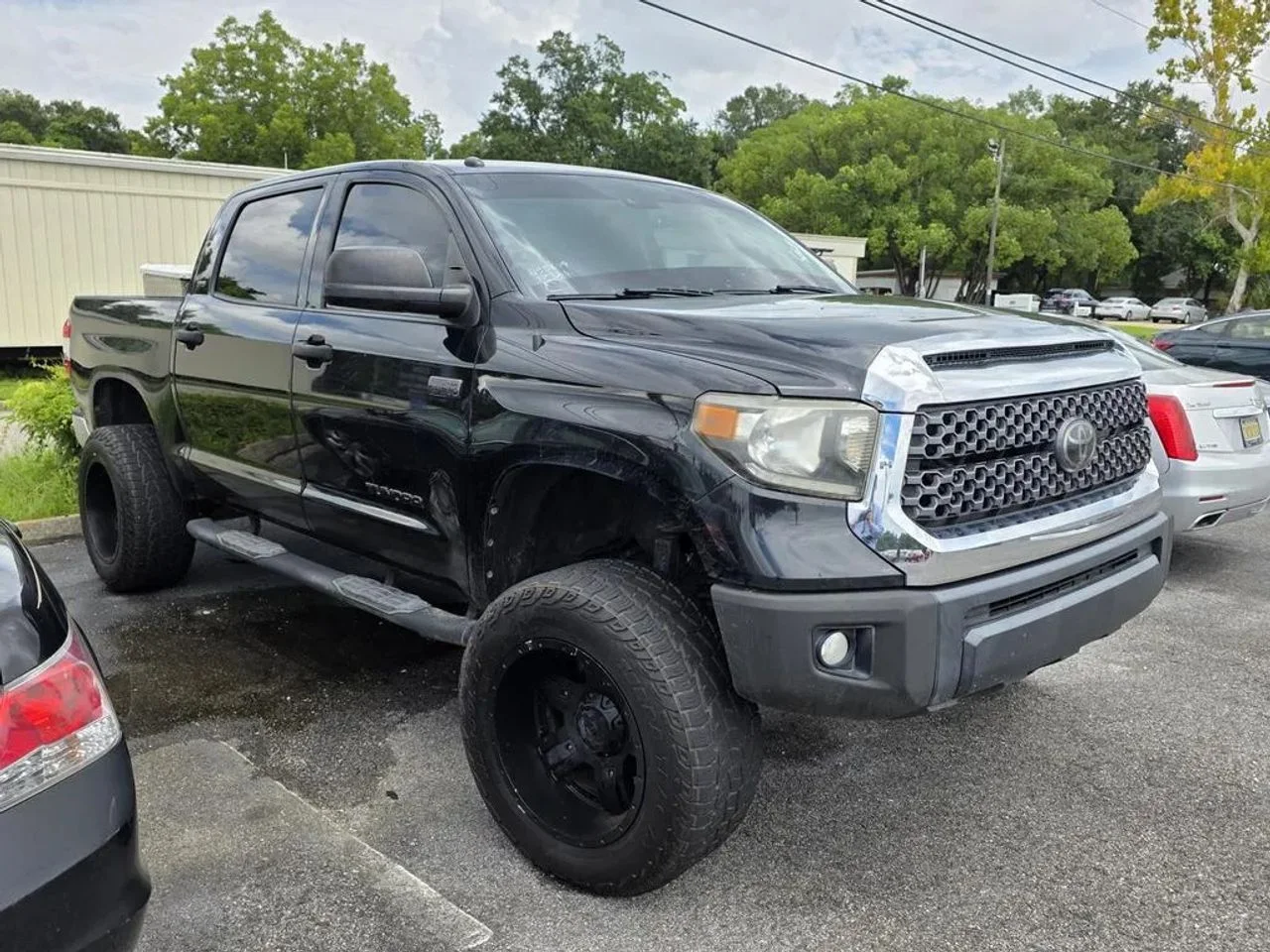
Drive around Mobile for a day and count what's parked at job sites, boat ramps, the Austal lot, the Airbus delivery gate, the port truck staging at the foot of Choctaw Point. The answer is mostly the same three trucks: Ford F-150, Chevrolet Silverado 1500, and Ram 1500. There's a reason. They work here.
If you're shopping a used truck in Mobile, Alabama, this is a guide to which years hold value, what's worth paying for, what to inspect on a Gulf Coast truck specifically, and how to think about diesel vs gas in a market where you might be towing a boat to Dauphin Island one weekend and crawling I-10 to a Pensacola shift the next.
Why Trucks Dominate Mobile
Mobile has a working economy that runs on trucks. The combination is unusual:
- Heavy industry. Austal USA (shipbuilding), the Alabama State Docks, Airbus assembly, the steel plants, the paper mills out toward Saraland and Theodore — these jobs reward people who can haul tools, materials, and equipment.
- Coastal recreation. Boats. Mobile is a boat town. Bay access, river access, Gulf access. People in Mobile who don't tow a boat often have friends who do.
- Hurricane prep. Plywood runs, generator hauls, evacuating trailers — a real truck pays for itself the first time a storm comes through.
- Construction. The bridge work, the I-10 widening, every new subdivision out toward Semmes and Schillinger needs trucks on the job.
The demand is steady, year over year. That's why used trucks hold value in Mobile better than they do in markets where they're a lifestyle purchase. There's always a buyer.
Why F-150s and Silverados Are the Sweet Spot
Of the half-ton trucks, the Ford F-150 and Chevy Silverado 1500 lead the Mobile used market for three reasons.
1. Parts Availability
If your F-150 throws a check engine light on Hwy 90 at 6 AM, every parts store in Mobile (AutoZone, O'Reilly, Advance, NAPA) has the most likely parts in stock. Same for Silverado. Ram is close but a half-step behind on parts depth.
For the BHPH segment specifically, parts availability is huge. The lot's service department or local mechanic shop can keep an F-150 alive cheaper than they can keep a less-common truck running. That keeps the truck on the road and the buyer making payments.
2. Mechanic Familiarity
Every general repair shop in Mobile knows F-150s and Silverados cold. Diagnostic time is shorter. Labor estimates are tighter. Specialty work — a transmission rebuild, a fuel pump assembly, a transfer case swap — is something a competent shop will quote without a long pause.
3. Resale Demand
When you go to sell or trade in 3 years, F-150 and Silverado demand will still be there. The trucks practically sell themselves. That liquidity matters — it means a BHPH buyer who's three months into a deal and needs to trade up isn't stuck.
The Year Ranges That Hold Value
Not every model year is created equal. For the used market in Mobile right now, the sweet spots are:
Ford F-150
- 2015–2017 (12th generation, aluminum body). The aluminum body resists Gulf Coast corrosion in ways the older steel bodies don't. The 3.5L EcoBoost V6 and 5.0L Coyote V8 are both solid. Watch for: cam phaser issues on 2011–2014 5.0Ls (worse than the 2015+), turbo wastegate concerns on early EcoBoost.
- 2018–2020 (mid-cycle refresh). Better infotainment, better fuel economy, 10-speed automatic standard on most trims. Strongest year range if budget allows.
- Avoid (in Mobile specifically): 2004–2008 F-150s with the 5.4L Triton 3-valve. Cam phaser failure and spark plug breakage are well documented; on a humid-climate truck, these issues amplify.
Chevrolet Silverado 1500
- 2014–2018 (K2XX generation). The 5.3L V8 and 6.2L V8 are durable. The 4.3L V6 base engine is fine for light-duty use. Watch for: AFM (Active Fuel Management) lifter failure on 5.3L engines — there are AFM-delete kits available, and many used trucks have already had this work done.
- 2019–2022 (T1XX generation). Stronger frame, better towing, 8-speed and 10-speed transmissions. Premium pricing but premium build.
- Avoid: 2007–2013 trucks with the AFM 5.3L that hasn't had preventive work done. The lifter failure pattern is real, and repair is $2,000–$4,000.
Ram 1500
- 2013–2018 (DS generation). Best ride quality in the half-ton segment. The 5.7L Hemi is durable. Watch for: lifter and camshaft issues on Hemi engines (similar pattern to GM AFM). The 3.6L Pentastar V6 base engine is reliable.
- 2019+ (DT generation). Excellent interior. Premium pricing. Worth it if you can afford the entry point.
- Avoid: 8-speed transmission issues on early 2013–2014 trucks (recall fixed most, but confirm software is current).
Diesel vs Gas — The Mobile Math
Mobile's not a long-haul commute market like Houston or Atlanta, but it has its own diesel calculation.
Buy diesel if:
- You tow a boat over 6,000 lb regularly
- You commute Mobile to Pensacola, or Mobile to Biloxi, daily — diesel torque + fuel economy pays off over 60+ mile round trips
- You work a job that needs the truck for serious load (construction, oilfield service contracts that come through the port)
Buy gas if:
- You'd be the second or third owner of the diesel (DEF system, EGR, emissions parts get expensive after warranty)
- Your annual mileage is under 18,000
- You don't tow heavy regularly
Diesel premium on the Mobile used market is real — expect to pay $4,000–$8,000 more for a comparable diesel version. The fuel economy advantage exists but rarely pays back the premium if you don't actually use the truck for the things diesel is for.
Mileage Benchmarks
A used truck with 100,000 miles is mostly the same as one with 120,000 miles if it's been maintained. The mileage band that matters in Mobile is this:
- Under 100K miles = premium pricing, less risk
- 100K–150K miles = sweet spot for value, assuming maintenance records exist
- 150K–200K miles = budget pricing, expect to need work in the next 12 months
- Over 200K miles = a project truck — buy with eyes open
Trucks with 250K+ miles can absolutely keep going (especially diesels, which can run 350K+), but the buyer needs to be comfortable with maintenance as a routine line item.
Mobile-Specific Truck Inspection Points
The 12-point inspection in our used car buying guide applies to trucks too. But trucks have a few extra inspection points that matter especially in Mobile:
Frame Inspection (Critical)
- Crawl under the truck or ask for it on a lift.
- Look at the frame rails front to back. Surface rust is normal. Flaking, scaling rust that's lifting off the frame is a deal-killer.
- Check the rear leaf spring shackles and hangers — common rust point on trucks that have spent time near salt water.
- Check the spare tire winch and crossmember.
Bed Liner / Bed Damage
- Pull back any spray-in or drop-in bed liner if possible.
- Look for rust around the wheel wells inside the bed.
- Check the bulkhead (front wall of the bed). Damage here = the truck has been used hard.
- A spray-in bed liner that looks recent might be hiding rust. Ask when it was installed.
Trailer Hitch and Wiring
- Look at the receiver hitch. Heavy wear in the receiver tube means the truck has been towing heavy, often.
- Test the trailer light plug — every position. Brake, left turn, right turn, running lights, ground.
- 7-pin trailer connectors with corrosion in the pins are common in Mobile humidity. Cheap fix but a clue to overall maintenance.
Suspension Sag
- Look at the truck from the side, parked on level ground.
- The truck should sit slightly higher in the rear than the front, or roughly level.
- A truck that sags noticeably in the rear (the front fender gap is bigger than the rear fender gap) has tired leaf springs from heavy hauling. Not a deal-killer but worth knowing.
Transfer Case (4WD Trucks)
- If the truck is 4WD, ask to test the transfer case engagement.
- Find a gravel surface (or a clear stretch of road). Engage 4-Hi at 25 mph or less. The transfer case should engage smoothly with a slight thunk.
- Engage 4-Lo at a complete stop, in neutral, then put it back in drive at low speed. Should engage without grinding.
- A 4WD system that won't engage is a $400–$1,500 fix depending on what's wrong.
Buy Here Pay Here Trucks: What's Different
If you're financing a used truck through a Buy Here Pay Here lot in Mobile rather than a bank, a few things are worth knowing:
- Truck inventory at BHPH lots tends to be older. Most BHPH stock is 2010–2018 trucks. Newer trucks (2020+) usually require a bank loan to make the math work for the lot.
- Down payments scale with price. A $9,000 truck might be $1,500 down. A $15,000 truck is more likely $2,500–$3,500 down. Bring more cash for a truck deal than for a sedan deal.
- Vehicle service contracts matter more on trucks. Trucks have more expensive failure modes than sedans (transfer cases, transmissions on a heavier vehicle, larger A/C systems). A $1,500–$2,500 service contract is often worth the cost on a BHPH truck.
- Tow capacity is rarely disclosed up front. Ask. If you're buying for hauling work, get the truck's actual GCWR confirmed (it's on the door jamb sticker).
What Elite Motors Stocks
We rotate a working selection of half-ton trucks — F-150, Silverado, Ram, plus the occasional Tundra and Titan when good ones come through auction. Year range typically 2013–2020. Mileage band typically under 150K. Every truck gets a 60-point PDI before listing, including all the truck-specific inspection points above.
Browse our current truck inventory — sorted by price, year, and mileage. Every truck listed with full out-the-door cost and weekly payment if financed.
Get pre-qualified online in 4 minutes if you're ready to shop. We finance trucks the same way we finance sedans — no credit pull, decision based on income and stability.