Cars for Sale Near Me: The Ultimate Guide to Finding Your Next Car Locally
Posted Monday, Sep 29, 2025

Finding cars for sale near me has never been easier, thanks to today’s online tools and local resources. Whether you’re hunting for a brand-new model or a reliable used vehicle, the process often starts with a simple search on your phone or computer. In fact, 95% of car shoppers now rely on online resources as their starting point and the average buyer spends about one-third of their research time on a mobile device. That means searches like “cars for sale near me” — often done on a smartphone — are incredibly popular for quickly locating available vehicles nearby.
In this comprehensive guide, we’ll walk you through all the best ways to find cars for sale in your area. From using websites and apps to visiting local dealerships and exploring private listings, you’ll learn how to see all the options. We’ll also tackle common questions (with 20+ FAQs answered) to help you navigate everything from finding used cars for sale near me to dealing with sellers on Facebook Marketplace. Let’s dive in!
Why “Cars for Sale Near Me” Is a Smart Search
When you’re in the market for a vehicle, searching for cars near me for sale makes a lot of sense. Focusing on local listings offers several benefits:
- Convenience: You can quickly arrange test drives and inspect the car in person if it’s nearby. No one wants to drive hundreds of miles just to see a car that might not even be “the one.” By looking for a car for sale near you, you save time and energy.
- Immediate Availability: Local dealerships and sellers often update their inventory in real-time. You’re seeing what’s currently on the market around you. There’s less risk of falling in love with a car only to find out it’s located across the country.
- Easier Logistics: Buying close to home simplifies things like transferring title, registration, and returning for any follow-up (like getting new plates or handling minor issues). You also avoid high delivery or shipping fees that come with distant purchases.
- Supporting Local Businesses: If you purchase from a local dealership or a private seller in your community, you’re helping the local economy. Many used cars for sale near me are offered by family-owned dealerships or neighbors looking to sell, so your money stays local. If you are around Mobile Al do not forget to pay our used car lot us a visit!
Another reason these “near me” searches are popular is the rise of location-based results. Search engines and car-listing websites can use your location (with permission) to show you relevant vehicles in your vicinity. Whether you type “cars for sale near me,” “used car for sale near me,” or even misspell it as “cars for sale mear me,” you’ll generally get a tailored list of nearby options. The goal is to make your car hunt as efficient as possible.
Start Online: Using Websites and Apps to Find Local Cars
Online research is the best starting point for finding cars around you. These days, almost every dealership and many private sellers list their cars on the internet. Here’s how to make the most of it:
- Aggregators and Marketplaces: Websites like Autotrader, Cars.com, CarGurus, Carfax Used Cars, and TrueCar allow you to input your zip code or location and filter results to see cars in your area. You can usually set a radius (e.g. 25 miles, 50 miles) to widen or narrow the range. These platforms aggregate listings from dealerships and sometimes private sellers, giving you a broad view. For example, a quick search on one of these sites can show you both new and used cars for sale near you in one place.
- Dealership Websites: Most car dealerships have their own websites with an online inventory. If you know some reputable dealers nearby, visit their sites directly. You’ll often find a “Search Inventory” feature where you can filter by new or used, make, model, price, etc. The advantage here is that the information might be very up-to-date (since it’s directly from the dealer) and you may see specials or certified pre-owned vehicles highlighted.
- Mobile Apps: Prefer using your phone? Nearly all major car marketplaces have mobile apps. Apps like Cars.com, Autotrader, CarGurus, and AutoList let you carry the search in your pocket. This is great when you’re on the go – you can literally be at a cafe and quickly check what’s available nearby. Some apps will even send you notifications when a new car that meets your criteria (say, a 2nd hand car for sale near me under a certain price) pops up. Using your smartphone’s GPS, these apps can automatically sort listings by distance from you.
- Google Search and Maps: Don’t overlook a simple Google search. Typing “cars for sale near me” into Google might show you a preview of local listings, especially from dealerships that advertise their inventory online. Google also often displays a map with nearby dealerships. You can click on a dealership’s Google listing to see what they have in stock (some dealers feed their inventory to Google now). Similarly, Google Maps, if you search “car for sale” or “car dealerships,” will pinpoint local sellers. From there you can visit websites or call directly.
Pro Tip: When using online tools, take advantage of filters. Narrow down by year, mileage, price range, body type, etc., to avoid wading through too many irrelevant results. For instance, if you only want SUVs, set the body style filter. If you’re only interested in certified used cars, check that option. Filters will save you time and make the search results more relevant.

Check Out Local Dealerships (And Their Reviews)
While online searching is fantastic, nothing beats seeing a car in person. Local dealerships near me remain one of the most trustworthy places to find a variety of cars for sale. Here’s how to leverage local dealers in your car search:
- Visit Dealer Lots: If you drive by dealerships on your daily commute, you’ve probably seen rows of cars with price stickers. Stopping in can give you a chance to browse and even sit in some cars to get a feel. Dealerships often carry both new models (if they’re a franchise dealer for a brand) and used cars of all makes. For example, a local Ford dealer might mainly sell new Fords but also have used Toyotas and Hondas on the lot from trade-ins. If you are close to Mobile Al come check our lot!
- Multiple Dealership Auto Malls: Some areas have auto malls or centers (like the Valencia Auto Center example in California, which houses many dealer brands in one place). These make it easy to hit several dealerships in one trip. You can compare different brands and prices conveniently. If you’re serious about buying soon, dedicating a Saturday to visiting a cluster of dealerships can be very productive.
- Read Reviews and Ratings: Not all dealerships are equal. Before you commit to a visit or purchase, it’s wise to check reviews on Google, Yelp, or DealerRater. If you search “used cars for sale near me”, you’ll likely see Google listings for nearby dealerships with star ratings. A dealer with a strong positive reputation is more likely to offer fair prices and good customer service. Don’t hesitate to choose a dealer a little further away if they have excellent reviews and the one down the street doesn’t.
- Use Google Business Profiles: One easy way to vet and locate dealerships is via their Google Business Profile. For instance, you can check out our Elite Motors Google Business Profile to see our location, hours, and customer reviews at a glance. This tool is great for finding directions to the showroom and seeing what other buyers have said about their experiences with us. It often also shows if the dealership is “responsive” in answering questions and whether they post updates (like new inventory or promotions).
When you visit a dealership, treat it as a fact-finding mission. You don’t have to buy on the spot. Feel free to walk the lot, take notes on prices and models, and ask questions. Many dealerships have salespeople who can quickly check if a specific model or feature is available at their other branch or coming in soon, etc. You can even test drive cars just to see if you like a particular model, without committing to buying that day.
Finally, keep an eye out for certified pre-owned sections or tags at franchise dealerships. These are used cars that are backed by manufacturer warranties and have passed specific inspections. They’re often labeled right on the lot (e.g., a section of the lot might have a banner “Toyota Certified Pre-Owned”). We’ll discuss more about CPO vs. used later, but if peace of mind is important, a certified vehicle at a local dealer might be your best bet.
Don’t Forget Private Sellers (Facebook, Craigslist & More)
Dealerships aren’t the only game in town. If you’re comfortable doing a bit more legwork, buying from a private seller can sometimes land you a great deal. Many individuals list their cars online when they’re ready to sell. Here’s how to find those:
-
Facebook Marketplace: Facebook’s Marketplace has become a hugely popular place to find cars for sale near me used by owner. You likely already have the Facebook app on your phone. Simply tap the Marketplace icon (it looks like a little storefront) and type “used cars” in the search bar. You can filter by location and distance to see what’s nearby. One advantage of Facebook is that you can often see the seller’s profile (at least a bit of it), which adds a layer of transparency. You might even have mutual friends with the seller, which can make the transaction feel safer. When using Facebook:
- Use the filters (price range, vehicle type, mileage, etc.) to narrow results.
- Be prepared to message the seller through Facebook. Keep communications polite and stick to questions about the car’s condition, history, and availability for viewing.
- Be cautious of deals that seem too good to be true (e.g., a 2018 SUV for $1,000). Some people list unrealistically low prices just to get attention. Always ask for details and never send money upfront to hold a car.
-
Craigslist: The classic platform for local buying and selling, Craigslist still has tons of car listings. Go to your city’s Craigslist site and head to the “Cars and Trucks” section, then filter by “owner” to see private sales. You can also filter by dealer if you want to compare. Craigslist is more old-school (text-based listings, often with few photos), but many enthusiasts selling older or “cool” cars might post here. As with Facebook, beware of scams: meet sellers in person in a safe, public place and bring a friend along if possible. Always inspect the car and verify the title before exchanging money.
-
Other Online Classifieds: Websites like eBay Motors, AutoTempest, OfferUp, or local community boards can have listings. eBay Motors allows for nationwide searches, but you can filter by distance from zip code. OfferUp (and its acquired partner Letgo) also has car listings similar to Facebook Marketplace. These platforms function via apps and usually show you sellers nearby.
-
Word of Mouth & Local Ads: Let friends and family know you’re looking for a car. Sometimes the old-fashioned network yields a great find (“Oh, my neighbor is thinking of selling his car…”). Also, local newspapers (print or their online sites) often have a classifieds section with cars for sale. Community bulletin boards (at supermarkets, churches, community centers) occasionally have “Car for Sale” flyers. These methods might get you in touch with a seller who isn’t as internet-savvy but has a quality car available.
Buying from a private seller comes with different responsibilities. You won’t usually get a warranty or the option to finance through the seller (if you need financing, you’d arrange it yourself or through your bank/credit union). So, you’ll want to be extra diligent about checking the car’s condition:
-
Always inspect the vehicle in daylight. If you’re not mechanically inclined, consider paying a local mechanic to do a once-over. Many mechanics will do a pre-purchase inspection for a fee, and it can be worth every penny.
-
Test drive the car on various road types (residential streets and highway) to spot any issues with how it drives.
-
Ask for maintenance records. Many careful owners keep a file of oil change receipts, etc. It’s a good sign if they can show this.
-
Verify the title status. Ensure the title is clear (not salvaged) and in the seller’s name. If the seller still owes money (there’s a lien), the transaction gets trickier — you might have to pay the lender directly to get the title cleared.
-
Be safe. Meet in public places, preferably during the day. Some police stations offer their parking lots as safe meetup spots for buyers/sellers to complete transactions. Bring a friend with you when possible. And trust your gut: if something feels off about the seller or the deal, you can walk away.
Private sales can yield bargains (since the seller isn’t covering dealership overhead, you might get a lower price) and sometimes you find unique or “cool” cars that dealers don’t typically sell. Which brings us to…
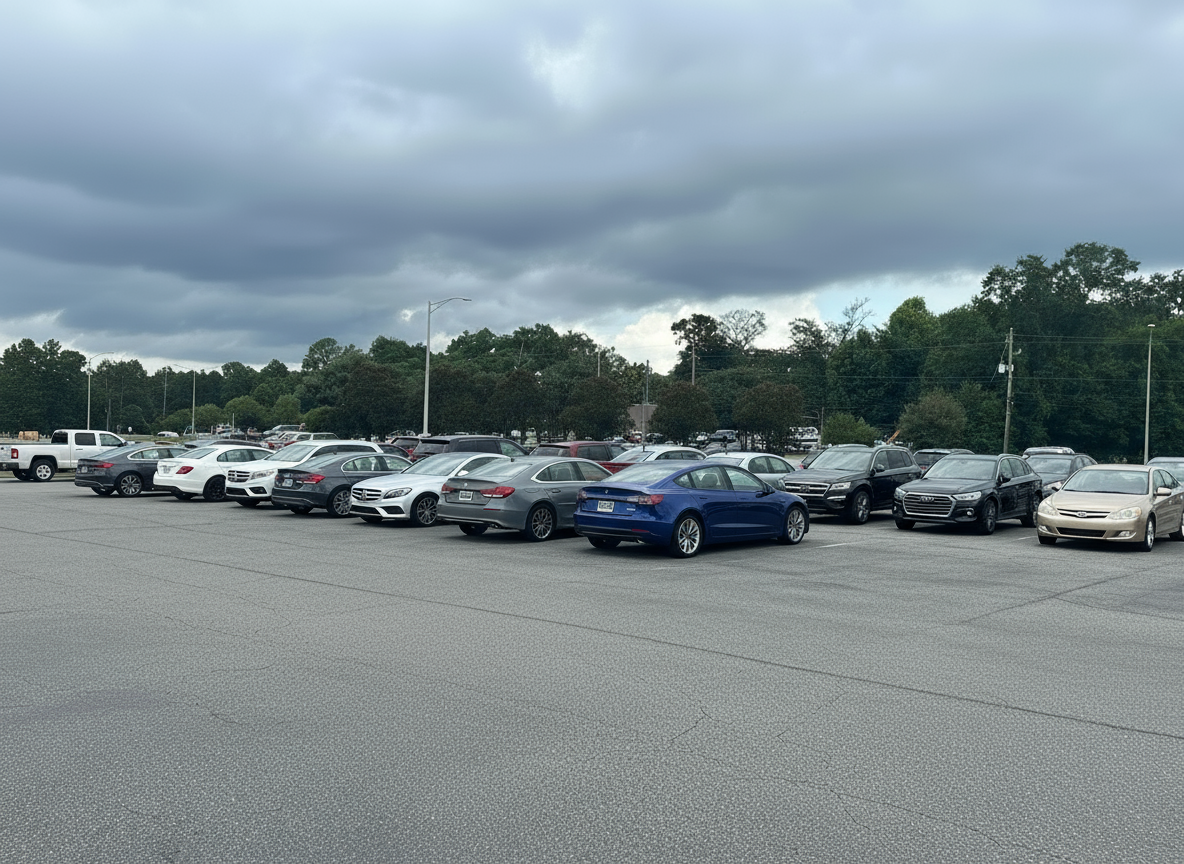
Finding Specific or Cool Cars Locally
What if you’re after something specific — say a particular model, or just something that stands out? For example, maybe you’re wondering “where can I find a Honda for sale near me” or you just want a “cool car near me for sale” that makes your heart skip a beat. Here are some tips:
- Be Specific in Searches: If you know the exact model, include it in your online search queries or filters. Instead of just “cars for sale near me,” search “Honda HR-V for sale near me” or “used Honda HR-V [Your Town].” This can directly pull up dealer listings of that model or even Facebook Marketplace posts mentioning it. There are also model-specific listing sites/forums (for example, certain enthusiast forums have classifieds). A quick Google of the model and “for sale” might lead you to specialized communities. If you are in or around Mobile AL you can check our inventory for any car model you prefer!
- Use Dealership Car Finders: Some dealership websites have a “Car Finder” or “Find My Car” tool where you can submit a request for a specific vehicle. If you’re set on a Honda HR-V, you could also directly check the inventory of local Honda dealerships via their websites. Franchised new-car dealers often have databases that can search other dealers’ inventory too. If you ask, “Do you have or can you get me an HR-V in this color/trim?” many dealers will try to trade or obtain one if it’s out there.
- Cool and Unique Cars: The definition of a cool car varies. You might be thinking of a classic muscle car, a sports coupe, or a custom ride. These are less likely to be found just by generic “near me” searches. For classics or antiques, look for local classic car dealers or check if your area has classic car shows/flea markets. Sometimes owners put “For Sale” signs on cars at shows. You can also search auction sites or Hemmings (a marketplace for collector cars) and then filter by location.
- Social Media Groups: Beyond Facebook Marketplace, Facebook has specific buy/sell groups for cars. For example, a local car enthusiast group or a brand-specific group (like “Classic Mustangs of [Your State]”). Joining those groups and posting that you’re looking for a certain car can yield leads. Similarly, apps like Nextdoor sometimes have people in your neighborhood posting things for sale, including cars.
- Dealers for Niche Cars: If by “cool” you mean exotic or luxury cars, major metro areas often have specialty dealerships (e.g., a luxury auto gallery or a sports car dealership). Even if you’re not in a big city, these dealers often list online and will work with out-of-town buyers. You might have to widen your “near me” radius a bit for a very specific high-end car.
Remember, if you expand your search beyond your immediate area to find that perfect ride, factor in how you’ll handle seeing the car and bringing it home. It’s often worth a short road trip to snag the right vehicle, but always try to see it in person or have a trusted agent inspect it before sending money. For relatively common models (like a Honda HR-V or Toyota Camry), you shouldn’t have to go too far — there will likely be plenty for sale near you.
New vs. Used: Options “Near Me” for Both
Your strategy might differ slightly if you’re looking for a brand-new car versus a used car. Let’s break down the local search approach for each:
-
New Cars for Sale Near You: If it’s a new car (say the latest 2025 model) you want, your best bet is franchised dealerships for that brand. “New cars for sale near me” will typically bring up authorized dealers. For example, if you search that phrase and your location, Google might show “Smith Honda - New Hondas for sale” or similar. Visiting the manufacturer’s official website can also help: most have a “Find a Dealer” tool where you can enter your zip code. Once you find nearby dealers, you can see their new inventory online or call them. One thing to note: are there new 2017 cars for sale near me? Likely not – a “new 2017” would be an unsold vehicle sitting around for many years, which is extremely uncommon by 2025. If you see older model years listed as “new,” they might actually be leftover stock or demo cars, but generally, new car inventory focuses on current and last year’s models. For truly new cars, stick with authorized dealerships and check their online inventory or give them a visit.
-
Used Cars and Second-Hand Cars: When it comes to used cars for sale near me, you have far more options. Used cars are sold by new-car dealerships (as trade-ins or certified pre-owned) and independent used car lots, as well as the private sellers we discussed. If you want a wide selection, large dealerships (especially ones known for used sales) can have hundreds of vehicles across all brands. Independent used car lots might have fewer cars, but sometimes more negotiable prices. Searching specifically for “used car for sale near me” or “second-hand cars for sale near me” will turn up both dealer and private listings. Be sure to read descriptions carefully. Dealers often provide a Carfax or similar report free on their online listings – look for a link that says “Show me the CARFAX” or “Vehicle History.” If not provided, you can copy the VIN and run your own report.
-
Certified Pre-Owned (CPO): This is a special category of used cars usually sold at franchise dealerships for the same brand. For example, a Toyota dealer selling a 2021 Camry that is “Toyota Certified.” CPO cars generally must pass a rigorous inspection and come with an extended warranty backed by the manufacturer. If you search something like “Certified pre-owned cars near me,” you’ll likely get links to local brand dealerships’ CPO programs. These cars cost more than regular used cars, but you get added peace of mind. If you want something pre-owned but worry about reliability, CPO might be worth it. (So if you see a dealer advertising pre-owned cars for sale near me, that’s just another term for used cars, often implying they are dealer-inspected or certified.)
One common question is whether to go new or used. If you’re on a tight budget, used is the way to go (you let someone else take the depreciation hit). But for some, the allure of a new car’s smell, warranty, and latest features is worth the higher price. The good news is that whichever route you choose, the methods in this guide apply. You can find new cars near you by focusing on dealers, and find used/second-hand cars near you by casting a wider net including private listings.
If you decide to look at both, just remember to adjust your search terms accordingly and not to mix up a listing. (E.g., don’t show up expecting a new car at a lot that only sells used, or vice versa.) Many dealerships clearly separate “New Inventory” and “Used Inventory” on their websites; make sure you know which section you’re browsing.
Tips for Inspecting and Closing the Deal Locally
By this point, you likely have a few promising leads on cars for sale near you. The next steps are crucial to ensure you end up happy with your purchase. Here are final tips as you move from search to purchase:
-
Compare Prices and Do Homework: Use online guides (Kelley Blue Book, Edmunds, NADA) to check the market value of the cars you’re considering. This helps you recognize if the price is fair. When you find, say, three used cars near me for sale that you like, compare their prices, mileage, and features. Having this info can give you leverage in negotiations.
-
Inspect the Car: We mentioned this for private sales, but it applies at dealerships too. Walk around the vehicle, check the tires, look for any scratches or dents (used cars may have a few — note them). Sit inside, test all the lights, electronics, AC, etc. If you’re at a dealer, ask about reconditioning they did (did they replace brakes or do an oil change before selling?). If you’re buying privately, consider a mechanic’s inspection. Some buyers even use mobile diagnostic services or bring an OBD-II scanner to check for error codes.
-
Test Drive Thoroughly: Always take a test drive. A good test drive isn’t just a five-minute spin around the block. Try to drive at city speeds and highway speeds. Pay attention to how the car accelerates, brakes, and steers. Listen for unusual noises. If you’re not familiar with how that model should drive, you might even test drive a similar car at a dealership for comparison. Don’t be shy about asking for more time behind the wheel if you need to feel confident.
-
Negotiating: Whether at a dealer or with a private seller, the price often isn’t set in stone. It’s perfectly fine to make a reasonable offer. Use any issues you found during inspection as talking points (e.g., “The tires are pretty worn, so I’d need to replace them – can we work that into the price?”). For private sales, people often price a bit high expecting negotiation. For dealerships, see if there are any dealer fees or “add-ons” and negotiate on the out-the-door price (which includes taxes and fees) rather than just the tag price.
-
Financing and Payment: If you’re buying at a dealership and need financing, compare what the dealer offers with what your own bank or credit union can do. Sometimes dealers have great financing deals (especially on new cars, like low APR for good credit). For used cars, having a loan pre-approved from your bank can put you in a stronger position. If buying private, typically it’s a cash or cashier’s check situation – be sure to handle large sums safely (meet at a bank if possible to make the exchange).
-
Paperwork: Ensure all paperwork is in order. At a dealership, they will handle the title transfer, registration, etc., for you (often you just pay a documentation fee). You’ll get a temporary tag and later the official title. In a private sale, you and the seller have to fill out the title transfer. Make sure the seller’s name on the title matches the person, and that they sign it over properly. Also complete a bill of sale (some states require this). Don’t drive off without proof of insurance either – call your insurance to add the new car before you take it home.
-
After-Sale Considerations: If it’s a used car, ask if there’s any return or exchange policy (some dealers offer a 3-day exchange or short warranty). If not, you might consider purchasing an extended warranty if the car is newer and you want coverage (dealers will gladly sell these; just evaluate if it’s worth it). Also, ask about any freebies or services: does the dealer include free oil changes? Car washes? Every bit helps.
Finally, trust yourself. You’ve done the research to find cars for sale near you and you’ve taken the proper steps to inspect and compare. Now it’s about choosing the car that feels right for your needs and budget. Whether you end up buying a used car for sale near you from a small local lot, a certified pre-owned from a big dealership, or a car from a neighbor down the street, you should feel confident if you’ve followed the guide above. Good luck, and enjoy the ride home in your new (or new-to-you) car!

Frequently Asked Questions (FAQs)
Below we answer some common questions related to finding cars for sale near you. Each answer is packed with tips and considerations to help you make the best decision in your car search.
How to find cars for sale near me?
Finding cars for sale near you is easiest if you start online. Begin by using car listing websites or apps that let you input your location. Sites like Autotrader, Cars.com, CarGurus, or Edmunds have search functions where you can enter your zip code or city and specify a radius (e.g., 10 miles, 25 miles). They will then show you available cars for sale in that area. On these sites, be sure to filter based on what you want – you can choose new or used, set your price range, pick specific makes or models, etc., to narrow down the results.
Another approach is to use Google or Google Maps. Simply searching “cars for sale near me” on Google can pull up listings and nearby dealerships. Google often provides a map highlighting dealerships and sometimes even shows a few car listings from those dealers directly in the search results. Clicking on these can take you to the dealer’s website or a Google vehicle listing page. Google Maps, on the other hand, can show you all the car dealerships in your vicinity if you search for terms like “car dealers” or “used cars”. From there, you can visit each dealer’s website or call them to inquire about current inventory.
Don’t forget social media platforms. Facebook Marketplace is a popular place to find local cars by owner (we’ll cover more on that later). Also, check if there are local online forums or community boards – for example, some neighborhoods have Facebook or Nextdoor groups where people occasionally post vehicles for sale.
Finally, consider the old-fashioned but effective method: driving around. You might see “For Sale” signs on cars parked in your neighborhood or along the road. Some used car lots might not have a strong online presence, so a quick drive down the “auto row” in your town (an area with many dealerships) could reveal options you didn’t see online. When you find a prospect, whether online or offline, make note of its details (price, mileage, location) and follow up by seeing it in person or contacting the seller. By combining online tools with local know-how, you’ll uncover the best cars near you for sale in no time.
A car for sale near me – what should I consider before buying?
When you’ve identified a car for sale near you (perhaps you spotted one on a listing or parked with a sign), there are several things to consider before you decide to buy:
1. Overall Condition: Take a close look at the car’s condition. How does the exterior look? Are there dents, rust, or significant scratches? Inspect the tires to see if they’re worn evenly (uneven wear might indicate alignment or suspension issues). Peek under the car for any signs of leaks (fluids on the ground). Check the interior – is it clean and well-maintained? A car’s condition can tell you a lot about how it was treated by its previous owner.
2. Vehicle History: If possible, get the vehicle’s identification number (VIN) and run a history report (like a Carfax or AutoCheck). This report can show if the car has been in accidents, how many owners it’s had, and if there are any title issues (such as salvage title or flood damage). It will also list maintenance records if they were reported. If the car is being sold by a dealership, often they’ll provide this report to you for free. For a private sale, you might have to obtain it yourself, but it’s usually worth the small fee.
3. Price and Market Value: Research the fair market value of that car (same model, year, condition, mileage) using tools like Kelley Blue Book or Edmunds Price Checker. This helps you know if the asking price is reasonable. Just because the car is “near me” doesn’t automatically mean it’s a good deal – you still want to ensure you’re not overpaying. Location can affect price (cars in some regions or cities might be pricier), so use your zip code in those pricing tools for accuracy.
4. Mechanic’s Inspection: Especially for a used car, it’s wise to have a trusted mechanic inspect it. They can check the engine, brakes, and other systems. Many mechanics offer a pre-purchase inspection service. If the seller is hesitant or won’t allow an inspection, that’s a red flag. If it’s a dealer, they usually have already done a basic inspection, but you can still ask your own mechanic to take a look or ask the dealer to put the car up on a lift for you to see underneath.
5. Test Drive: Never skip the test drive. Take the car out on various roads – a bit of stop-and-go city driving and some highway if possible. Listen for strange noises, watch how it shifts (in an automatic, shifts should be smooth; in a manual, the clutch should feel solid), and test the brakes for responsiveness (car shouldn’t pull to one side). Also, test the electronics – radio, backup camera, turn signals, windows, locks, etc. A thorough test drive can reveal issues that you won’t catch by just looking at the car.
6. Seller’s Information: If it’s a private sale, talk to the owner. Ask why they are selling the car. A genuine reason (e.g., “I need a larger car for my family” or “I’m moving and can’t take it”) is a good sign. If they are the original owner, that’s great – you can learn a lot about the car’s history directly from them. If they’re a reseller who flips cars, then rely more on your own inspection since they might not know the car’s full history. If it’s a dealership, inquire about any warranty or return policy for used cars. Some dealerships offer a 30-day or X-mile return window or a limited warranty, which can give you some peace of mind.
Considering all these factors for a car for sale near you will help you determine if it’s the right one to buy. The key is diligence: gather as much information as you can, verify it, and don’t rush into the purchase until you feel satisfied that the car is in good shape and priced fairly.
Are there new 2017 cars for sale near me?
It’s a bit unlikely to find brand-new 2017 cars for sale near you in 2025 (or whatever the current year is, if significantly past 2017), but let’s clarify what this question might entail. A “new 2017 car” would mean a vehicle from the 2017 model year that has never been titled or sold before – essentially, it sat unsold for many years. Typically, dealerships sell off each year’s models and don’t keep brand-new cars in inventory for that long, but there are a few scenarios to consider:
-
Leftover Inventory: Occasionally, a dealership might have a leftover model year vehicle that didn’t sell when it was current. For example, in early 2018, you might still find a new 2017 car on a lot being sold at a discount. However, by the time several years pass, these tend to be gone. A car from 2017 would usually have been sold by 2018 or 2019 at the latest, even if heavily discounted. It would be very rare for a dealer to still have a brand-new 2017 now. They would have likely auctioned it off or sold it as a used/demo by now.
-
Demonstrators or Test Drive Vehicles: Sometimes dealers label cars as “new” if they were never technically sold, even if they have a few thousand miles from test drives. A car used by the dealership manager or as a customer loaner could be a 2017 that wasn’t sold in ’17, but by now those would either be sold as used or possibly as “new” with heavy discounts and full warranty. If you see a listing for a “new 2017”, double-check the details – it might have some mileage or usage.
-
Collector or Specialty Cars: In some very unique cases, a specialty car (like a high-end sports car or limited edition) from 2017 might have been kept unsold in a showroom for collectible value. But usually those aren’t advertised as “for sale near me” in the general sense; they’d be niche and likely you’d have to seek them out.
Most likely, if you’re searching for a 2017 model now, you’ll be looking at used cars. And the good news is, you’ll have plenty of those to choose from. A 2017 car in 2025 is about 8 years old, which is a common age for people to sell or trade-in vehicles. You can find 2017 models at used car dealerships, in CPO programs (e.g., a 2017 Honda at a Honda dealer’s certified pre-owned lot), or through private sellers. These cars will be pre-owned, not new, but many will be in great condition and have relatively low miles, depending on the previous owner.
So, while the chance of finding a new (untitled) 2017 car at a dealership near you is extremely slim, you can certainly find 2017 model year cars for sale as used vehicles. If your intention was to get a “like new” older model to possibly save money, focusing on certified pre-owned might be a great approach. You’ll get something as close to new as possible (in terms of condition and warranty) without it literally being a brand-new car from that year. Always check the manufacturing year and the registration date on any listing that claims to be new, to ensure you know what you’re getting.
How to find a cool car near me for sale?
Looking for a “cool” car near you? The definition of cool car can vary widely – it might be a stylish sports car, a rare classic, a high-performance machine, or simply something that stands out from the everyday sedans. Here’s how you can track down that special ride:
-
Identify What “Cool” Means to You: First, narrow down what you’re after. Is it a specific model or just something that’s not common? For some, a cool car could be a classic muscle car (like a ’60s Mustang or a vintage Camaro). For others, it might be a modern sports car or luxury car (like a Corvette, Porsche, or a fully-kitted Tesla). Knowing the category or specific models will help target your search.
-
Check Specialty Dealerships: Standard dealerships might not carry rare or classic cars (aside from maybe a trade-in that pops up). However, many cities have specialty dealers that focus on performance or classic vehicles. For instance, an “Exotic Auto Gallery” or “Classic Car Warehouse” – these types of places often have a rotating inventory of interesting cars. They might be a bit of a drive depending on where you live, but it could be worth it. These dealerships often list their inventory online, so search for those in your region (e.g., “classic car dealership [Your City]” or “exotic car for sale [Your Region]”).
-
Car Shows and Local Clubs: Car enthusiasts often congregate at local car shows, cruise-ins, or club meets. Visiting a cars & coffee event or a classic car show in your area can be both fun and fruitful. Not only do you see cool cars up close, but owners sometimes put “For Sale” signs on vehicles at these events. Or you can strike up a conversation – even if the owner’s car isn’t for sale, they might know someone with a similar model who is looking to sell. Likewise, join local car clubs or forums for the type of car you consider cool. For example, if you’re into classic British sports cars, a local MG or Triumph club could have members occasionally selling their cars.
-
Online Enthusiast Forums and Classifieds: Beyond general marketplaces, there are enthusiast websites that have classified sections. Sites like Hemmings (for classic and collector cars), Bring a Trailer (online auction site for special interest cars), or model-specific forums (for example, a forum for Nissan 350Z enthusiasts might have a “cars for sale” section). These can sometimes lead you to cars that are within driving distance. If using these, just be prepared that you might have to travel a bit or arrange shipping if the car isn’t super close.
-
Facebook Groups and Marketplace: We touched on Facebook Marketplace for general used cars, but if you have a particular cool car in mind, search Facebook for groups related to it. For example, “Air-Cooled VW Classifieds” or “Corvette Buy Sell Trade [Region]”. There are many buy/sell groups for car models and for regions that cater to enthusiasts. Joining those can give you leads on cool cars being sold by other hobbyists. Marketplace itself also has filters; you can type the specific model (e.g., “1969 Camaro” or “Mazda Miata”) and see what pops up locally.
-
Auctions: If you’re looking for vintage or classic cool, local auction houses or estate auctions sometimes have vehicles. Also, police or government auctions occasionally have interesting finds (though mostly they’re more basic cars). Auctions can be hit or miss and often the cars are sold as-is, but it’s another avenue.
When pursuing a cool car, keep in mind these purchases might require more due diligence. If it’s an older or rare model, check if there are local mechanics who can service it and availability of parts. Cool cars might also come with cool (read: higher) insurance costs, so get a quote beforehand if that’s a concern. But ultimately, finding a cool car near you is about tapping into the enthusiast network and local resources. Be patient – the search can be part of the fun. And when you finally find that head-turning ride, it’ll be worth the effort!
How to find cars for sale near me on Facebook?
To find cars for sale near you on Facebook, you’ll primarily want to use the Facebook Marketplace feature, since that’s where users list items (including vehicles) for sale. Here’s a step-by-step guide to using Facebook to hunt for local cars:
-
Access Facebook Marketplace: Open the Facebook app on your mobile device or go to the Facebook website on a computer and log in. Look for the Marketplace icon – on the app, it’s usually a little storefront symbol at the bottom of the screen (on iPhone) or top (on Android). On desktop, you might see “Marketplace” on the left sidebar. Click or tap that.
-
Search for Cars: Once in Marketplace, you’ll see a search bar at the top. You can type general keywords like “used cars” or something specific like “Toyota Camry 2015”. Facebook might also have a dedicated Vehicles section you can click on, which will then allow you to refine by make, model, price, etc. If you start broad, say by typing “used cars”, you can later narrow down using filters.
-
Apply Filters: Use the Filters option to tailor your search results:
-
Set your location (Facebook typically uses your profile’s location or phone GPS, but you can change it) and a radius around it. For example, you might choose “within 30 miles”.
-
Set a price range to weed out cars that are too cheap (possibly junk or scam) or too expensive beyond your budget.
-
Choose vehicle make and model if you have specific ones in mind, or leave it open to see all.
-
You can also filter by year, mileage, transmission, and more. There’s even an “Individual sellers” vs “Dealerships” filter. You might start with individual if you want private sales, or see all if you don’t mind dealer listings on Facebook.
-
-
Browse Listings: You’ll now see listings of cars that match your criteria. Each listing usually shows one or more photos, the asking price, the year/make/model, and the location of the seller. Click on any listing to see the full details. Sellers often write a description with more info about the car’s condition, mileage, any issues, etc. Read that carefully.
-
Contact the Seller: If a car interests you, you can hit the “Message” or “Ask for Details” button to contact the seller through Facebook Messenger. It often has a pre-filled message like “Is this still available?” which you can send, but it’s better to introduce yourself politely and ask specific questions not already answered in the listing. For example, “Hi, I’m interested in your car. Is it still available? Also, could you tell me if you have maintenance records and how the tires are?” Sellers might take some time to respond, since these are regular folks like you.
-
Be Safe and Smart: When using Facebook (or any online platform) to buy a car, keep some safety tips in mind. Facebook profiles are attached to listings, which can make things feel a bit safer than Craigslist because you can see a bit about the person. Still, remain cautious. Common advice: meet in a public place for the first viewing. Many police stations have e-commerce safe zones. Don’t go alone if you’re carrying cash. For the test drive, some people might want to meet at a public spot and then go for a drive; consider bringing a friend along when you test drive someone’s car.
-
Negotiation & Next Steps: If you decide you like the car, you’ll negotiate price and arrange payment details with the seller. Facebook doesn’t handle payment for vehicles (there’s no built-in escrow or anything), so that will be between you two. Typically, a cashier’s check or cash in person is how private car sales happen. Make sure to get the title from the seller and a bill of sale.
Facebook Marketplace is quite popular for cars because it’s free to use and connects local buyers and sellers easily. You might find everything from older budget cars to nearly new models listed there. Just remember, the usual caveats apply: there’s no warranty when buying from an individual via Marketplace, so do your due diligence (inspect, test, possibly get a mechanic to check it out). But many have successfully found their next car through Facebook – it’s like the modern version of classified ads in the local newspaper, with the convenience of instant messaging. Happy Facebook car hunting!
How to find used cars for sale near me?
Finding used cars for sale near you involves a combination of online searching and some local legwork. Here’s a comprehensive approach to zero in on the best used car options in your vicinity:
1. Use Online Used Car Marketplaces: Start with well-known used car websites. Autotrader, CarGurus, Cars.com, TrueCar, and Edmunds are a few major ones. These sites allow you to input your location (zip code or city) and how far you’re willing to travel (e.g., within 10 miles, 25 miles, 50 miles, etc.). Once you set that, filter the results to used cars (typically there’s a new/used toggle). You can then refine by make, model, year range, price range, mileage, and so on. The result will be a tailored list of used cars in or near your area. These platforms are great because you can compare prices and see a lot of options in one place. They often also indicate whether a listing is from a dealership or a private seller.
2. Check Dealership Websites: Most dealerships (both franchise new-car dealers and independent used-car lots) post their inventory online. If you know the names of some dealerships in your area, visit their websites. Look for a section like “Pre-Owned Inventory” or simply “Used Cars.” Some dealership websites even let you search across multiple locations if they are part of an auto group. By going direct to these sites, you might find cars that are not listed on the big marketplaces (though most dealers do list on Autotrader/Cars.com as well). The advantage of browsing a dealer’s site is you might also see their specific promos, certified pre-owned vehicles, or get more details like Carfax reports integrated into the listing.
3. Local Classifieds and Apps: Apart from big websites, don’t forget more local or general apps. Craigslist is a staple for finding used cars by owner near you – just go to your city’s Craigslist and check the “cars & trucks - by owner” section (and maybe “by dealer” too for a full scope). Facebook Marketplace is extremely popular now for used cars (as detailed in the previous FAQ). Apps like OfferUp or Letgo (which merged with OfferUp) also have people posting cars for sale. Searching those can uncover some hidden gems that aren’t on mainstream sites.
4. “Used Cars Near Me” Aggregators: A tool like AutoTempest acts as a meta-search, pulling listings from multiple sites (Autotrader, eBay, Cars.com, etc.) when you search for a specific car. This can save time by not having to search each site individually. You can enter your location and criteria once and see a broad range of results. Keep in mind, though, it might show cars a bit outside your radius, so double-check distances.
5. Visit Used Car Superstores: If you prefer to browse in person, consider visiting large used car dealers like CarMax (if one is nearby) or other auto malls. These places often have hundreds of cars on one giant lot. You can walk around and see many makes/models at once. Even if you ultimately buy elsewhere, visiting such a lot can help you get a sense of different cars if you’re undecided on model. CarMax, for example, also has an online search – you could see what’s at your local CarMax on their website before heading out.
6. Utilize Search Alerts: Many websites allow you to set up email alerts for new listings that match your criteria. If you’re not in a rush, this can be handy. For example, on CarGurus or Autotrader, after you perform a search (say, “used SUVs under $15,000 within 30 miles”), you can often save that search and the site will email you daily or weekly with new cars that fit. This way, you won’t miss out when a good deal pops up.
7. Check Vehicle History and Compare: As you find specific cars you like, use their VIN to get a history report (some sites show a free snippet of Carfax – like number of owners or accidents – or you may have to buy a full report). Compare prices with similar models you’ve seen to ensure it’s in line. If something is priced significantly lower than the norm, be cautious – it could indicate an issue or just that it will sell fast.
8. Visit and Inspect: Once you have a shortlist of promising used cars near you, go see them! Pictures and descriptions are helpful, but nothing replaces an in-person look and test drive. When you go, inspect the car thoroughly (as described in prior answers: check exterior, interior, under the hood, tires, etc.). If you’re at a dealer, don’t hesitate to ask questions about any reconditioning they did or if they have service records. If you’re meeting a private seller, consider arranging a pre-purchase inspection with a mechanic.
By following these steps, you’ll cast a wide net and then filter it down to the best candidates. The aim is to ensure you’re seeing all the relevant used cars for sale near you, comparing them, and then zeroing in on the one that offers the best combination of condition, history, and price. It might take a bit of effort, but given that a car is a big purchase, the time spent will be worth it when you drive home a reliable used car at a great price.
How to see all cars for sale near me?
If you want to see all cars for sale near you, you’re likely looking for a comprehensive view of what’s available in your local market, regardless of dealer or platform. While no single source will show literally every car (since various sellers use different channels), here are ways to cover as much ground as possible in your search:
- Use Multiple Online Platforms: Start with broad-search tools. Websites like AutoTrader and Cars.com aggregate listings from many dealerships (and some private sellers). They are among the closest to showing a “catch-all” inventory of cars around you. AutoTrader, for instance, has filters for both new and used, dealer or private. Perform a search there with your zip code and a wide radius (you might start with 50 or 100 miles if you want to see a lot, then narrow down geographically if needed). Do the same on Cars.com and CarGurus. You’ll notice a lot of overlap (the same car might appear on multiple sites), but occasionally one site has a listing that the others don’t.
- Try AutoTempest or Similar Meta-Searches: AutoTempest.com is a useful site that lets you search “all the cars, one search.” It pulls data from a bunch of different sources (including Craigslist, eBay Motors, Cars.com, etc.) when you enter your criteria. It’s particularly handy if you’re open to various models and just want to see a broad sweep of what’s out there. Keep in mind, it might include cars that are a bit outside your immediate area if they match what you put in.
- Check Local Dealership Chains: If you have large dealership groups in your area (for example, some cities have an “[Area Name] Auto Group” that owns multiple brand dealerships and a central used car outlet), check their main website. They often allow searching across their entire inventory network. This way, you see cars from all their locations. Also, some dealership groups advertise a combined inventory in TV or radio ads (like “over 1,000 cars to choose from”). Those websites can be gold mines for selection.
- Explore Facebook Marketplace and Craigslist: Those are huge for private listings, and many smaller dealers list there too. While it’s not aggregated in one list, you can browse Facebook Marketplace by not putting any model keywords and just setting a wide radius and see all vehicle listings around you. On Marketplace, go to the Vehicles category and then filter by distance, price, etc., without specifying make/model – it’ll essentially show you everything available from cheapest to priciest, or newest listings, etc. Similarly on Craigslist, you could just go to the cars section and not narrow the search (or use broad terms like the letter “a” just to get results, as Craigslist usually needs a keyword) – then sort by newest. This is a bit overwhelming in areas with tons of listings, but it does show a wide view.
- Consider New Car Inventory Searches: If you want to see all new cars near you, manufacturers often have inventory search tools. For example, the Toyota, Ford, etc., official websites often have a “search inventory” where you can see what all local dealerships have in stock (for that brand). It’s like a consolidated view for new cars of that brand. So if new cars are in your purview, hitting each brand’s site could show you the new car options pretty comprehensively.
- Local Auctions or Car Exchanges: Sometimes, if you want to see all cars, including those not yet on the market in the traditional sense, keep an eye on local car auctions. Vehicles from fleet sales, bank repos, etc., end up at auction and might not be listed on consumer sites. Attending an auction preview could show you a variety of cars that will be for sale on auction day. However, auctions are usually for more seasoned buyers and might not be the best route if you just want to casually shop.
- Ask for Inventory Lists: If you’re focusing on dealerships, you can contact them and ask for an inventory list or if they have certain types of cars. Some used car lots don’t update online often. A quick phone call asking “What do you have under $10,000?” or “Do you have any 4x4 trucks on the lot now?” might get additional info.
- Drive Around “Car Rows”: In many towns, car dealerships cluster together on certain streets or auto malls. Taking a drive through those areas will let you physically see lots full of cars for sale. Even after doing an online roundup, sometimes you’ll spot something from the street that wasn’t online (maybe a newly arrived trade-in not yet listed, or a “For Sale by Owner” parked at a corner).
Despite all this, remember that seeing “all” cars is somewhat aspirational because listings are spread across many platforms. But by combining searches on major websites, checking local classifieds, and physically scouting your area’s dealerships, you’ll get the most complete picture possible. It’s a bit like casting multiple nets to ensure nothing slips through. If you’re thorough, you can be confident that you’re aware of the majority of options out there and you won’t miss a great deal just because it was on a less common platform.